I wake at 7:00am PST to the persistent trill of the Swainson’s thrush. Outside my tent, the ridgeline is bathed in purple and gold as the sun crests the distant mountains and ignites the blooming fireweed. Deep in the Idaho Panhandle just west of us, our colleagues navigate windfall and wildlife sightings through the Saint Joe River basin, but today Cory and I are heading back to Montana on the hunt for noxious weeds.
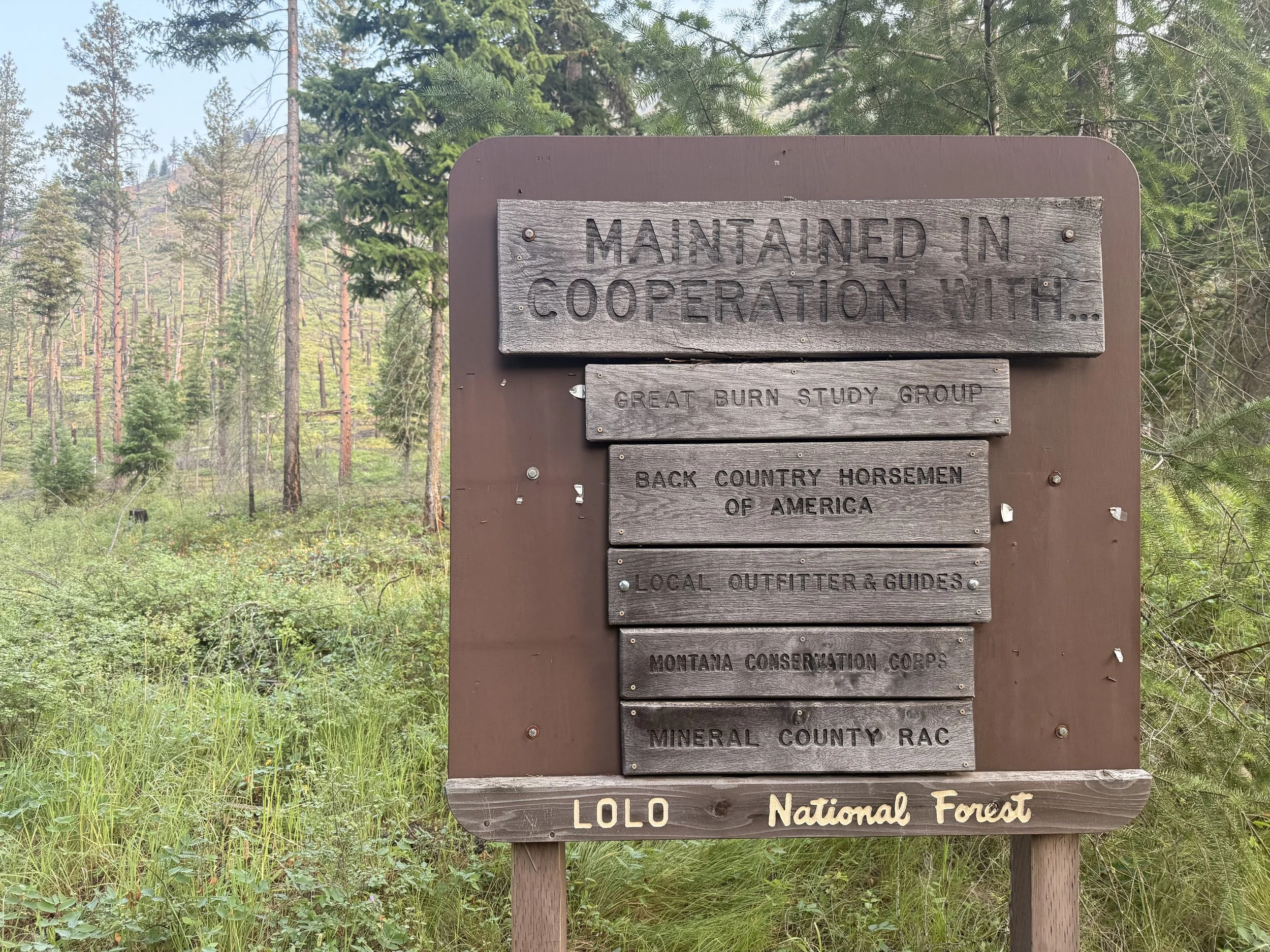
Collaborative signage at Clearwater Crossing, MT featuring GBCA’s name when the organization first started—Great Burn Study Group
The Great Burn Conservation Alliance (GBCA)’s mission area spans 1.9 million acres of largely undeveloped land. It crosses a time zone, a state line, and three national forests. It is an ecological area defined by the historic 1910 wildfires that remade this part of the American West. These destructive fires left the charred landscape untampered by human hands for nearly a century, allowing the region to recover into the wilderness areas that we know and love. The ecological boundary drawn by the fires does not parallel political boundaries, however, leaving the intact landscape at the whim of three distinct National Forest management plans. That is where GBCA comes in.
Founded in 1971 as an advocacy group lobbying for protected wilderness, GBCA has grown to fill the niche of connected landscapes, advising, consulting, and collaborating with all three national forests within the mission area. And much of this connected management is thanks to weeds.
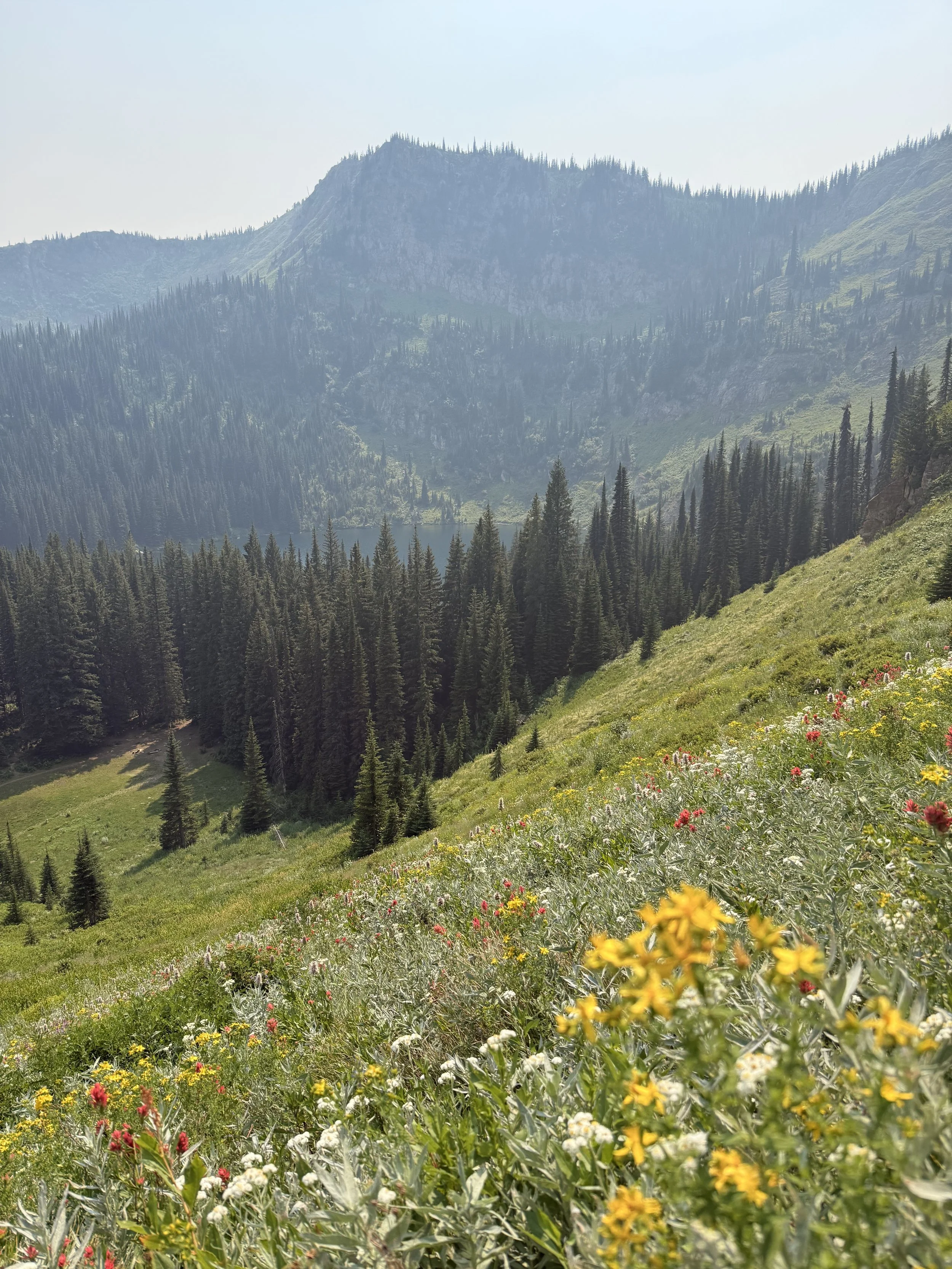
Saint Johnswort in a healthy meadow above French Lake, MT
From our vantage point near Lightning Peak, we can see all the way down the Fish Creek drainage and out towards the Stateline trail dividing Idaho from Montana. The peak rises behind us, sharp cliffs punctuated by pockets of grand fir and whitebark pine, softened by meadows of bear grass and arnica. Ahead of us, the deep blue waters of French Lake sparkle in the afternoon sun. Wildflowers bloom all the way down the sloping meadow. And there, in the middle of the healthy field, the emerald and mustard yellow of flowering Saint Johnswort creeps ever outwards. Noxious weeds know no boundaries, only areas of disturbance where they might take root. They have a tenacity for transportation, hitching rides on hiking boots, mule trains, motor bike wheels, and the well-traveled coats of wandering mountain goats, elk, and mule deer. Unmanaged, these priority weed species will happily overrun any open space, forming monocultures and outcompeting native vegetation that support specialized pollinators. As a roving weeds team, GBCA’s Restoration Crew spends our summers chasing these weeds through drainages and up mountain sides, running between forests and states and time zones to hold a line and maintain the wilderness character of this historically and ecologically significant landscape. Working as we do between management areas, we have the ability to track in real time the spread of infestations and catch when new species jump the state line. We are the boots on the ground, monitoring and reporting back to all three forests. Keeping the landscape and her stewards connected.
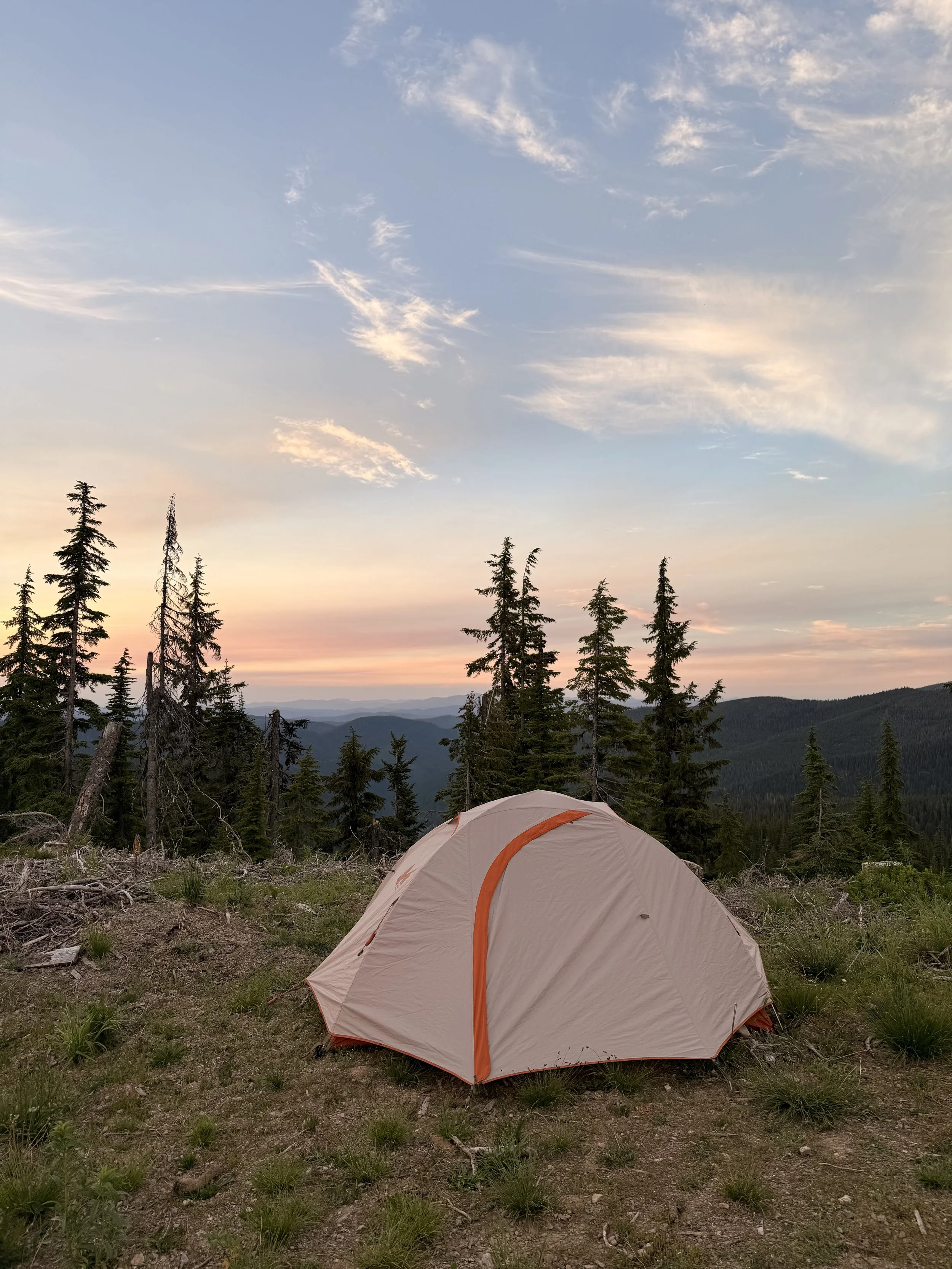
Camping along the state line, MT and ID
After the early years of advocacy and politically-oriented protests, the noxious weeds program was GBCA’s first olive branch to the Forest Service. In 2003, the organization realized that third-party recommendations to isolated management authorities was not enough to ensure cohesive stewardship. They were ready to get their hands dirty and their boots in the soil, so in 2006 they offered to join the Clearwater National Forest (now known as the Nez-Clear) in their treatment of noxious weeds. The early partnership proved successful, and soon GBCA’s restoration crews were the primary weed managers in the Kelly Creek drainage. As the collaboration evolved, the crews expanded out of Kelly Creek, jumping the state line into the Lolo National Forest and eventually expanding into the Idaho Panhandle National Forest. The intimacy of hands-on stewardship pulled the non-profit into the orbit of practical management, positioning them as a liaison between the forests. And when federal funding dried up in 2024 and the forests could not hire crews of their own, GBCA stepped up and kept the work going.
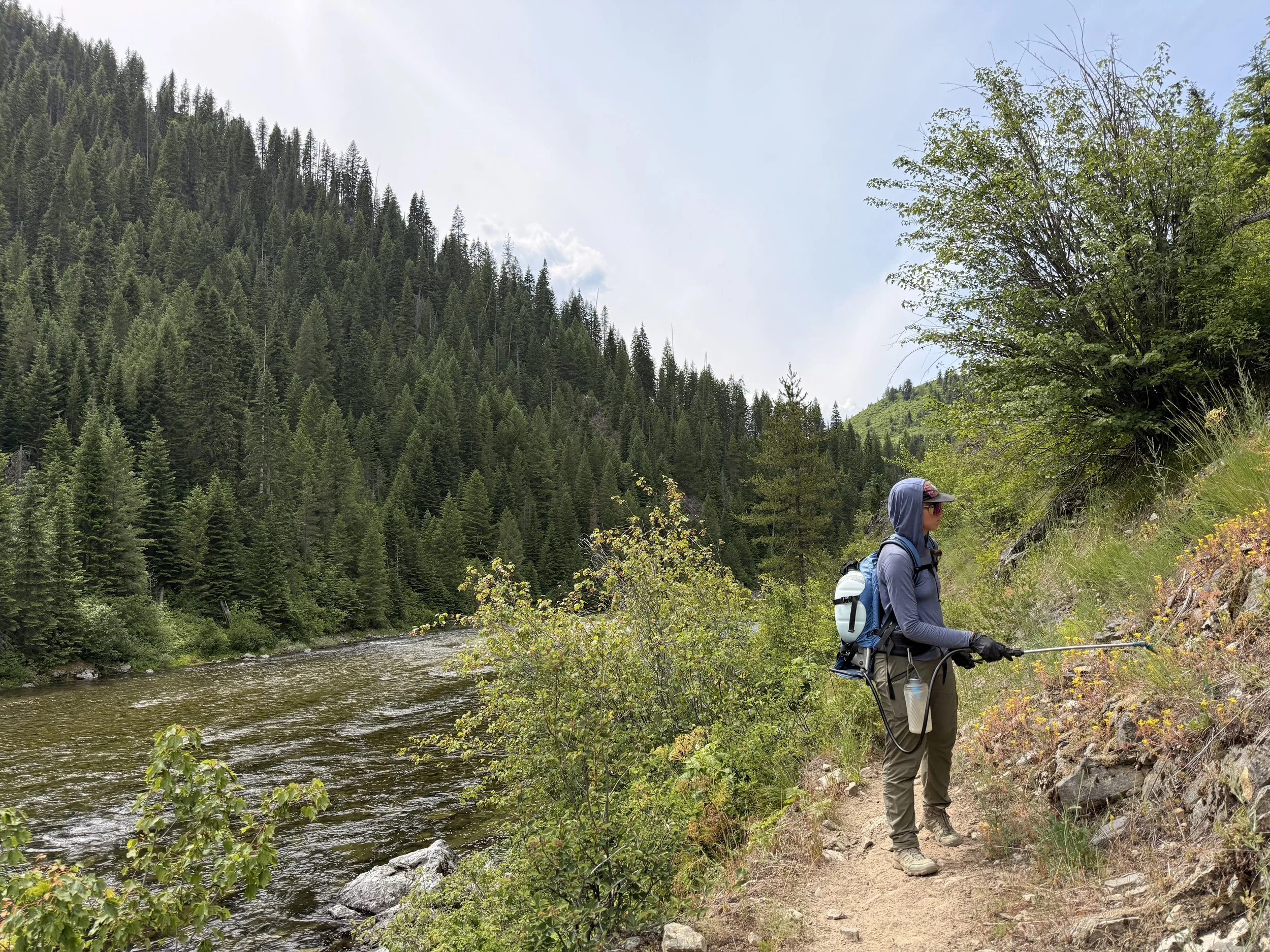
Crew member treating weeds along Kelly Creek, ID
The ecosystem of landscape management is dynamic, multi-faceted, and relies upon collaboration. Third-party organizations like the Great Burn have grown to fill an important niche in this ecosystem, serving as mediators, initiators, liaisons, and the boots on the ground to make sure that our landscapes are stewarded not as fragments, but as a whole. As places where mountain goats can enjoy the same protections on both sides of the state line ridge that splits their territory. Places where fishers and wolverines can wander their full range without crossing a road, and where bull trout can spawn without toxic runoff from human infrastructure. Places where wildflower meadows can thrive. Working alongside federal employees and outside of federal constraints allows us to define our work with and by the landscapes we steward. It allows us to see beyond the regulations of any one management district and bring them into conversation with each other.
This summer in the Great Burn’s mission area has been deeply invigorating, for the hard work of earning my keep in wild places, but also for the partnerships I have witnessed along the way. I love meeting backcountry outfitters who know this organization and enthusiastically invite us in. I admire the forest managers who help train us and whom we report to. And I love becoming a part of this landscape and helping to build a model of stewardship that reaches beyond boundaries.