Self-heal in the Great Burn
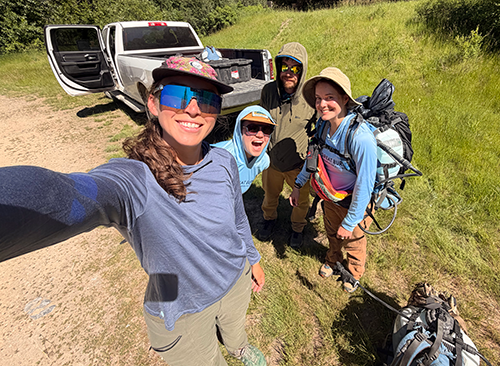
Kelsey (right) with her crew mates.
While spraying weeds in the Lolo National Forest, I couldn’t help but notice an abundance of a low-growing purple flowers covering the ground. Many native plants quickly recolonize an area after a disturbance—such as herbicide application. You have likely seen this species before, given its wide distribution and tendency to pop up along trailsides or in previously treated plots.
I recognized it immediately as Self-Heal (Prunella vulgaris), though I admit I rarely bend down to photograph it.
Self-heal typically thrives in the understory of towering hemlock, larch, and cedar forests. While it prefers moist soil, it frequently lines the trails throughout the Great Burn mission area of the Lolo National Forest. If you look closely, you can see the hooded upper lip of the petals and a fringed lower lip extending downward. Beyond its unique look—featuring tubular purple, pinkish to white packed tightly into dense spikes—it earns its common name from a long history of medicinal use.
Traditional Uses & Modern Benefits
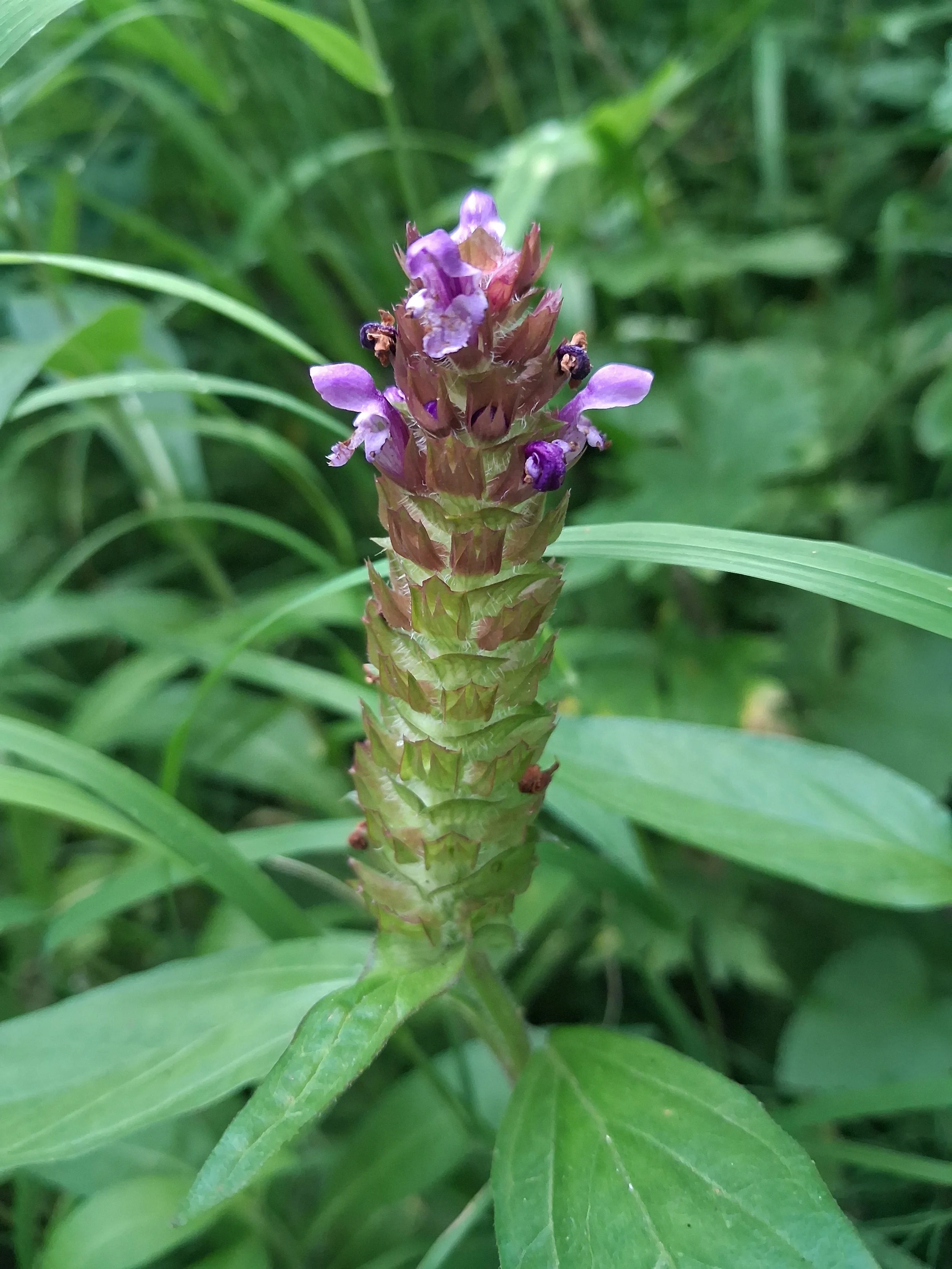
Self-heal on the Lolo National Forest in the Great Burn
Teas & Infusions: Boiling the leaves creates a refreshing drink traditionally used to soothe sore throats and mouth sores.
Topical Relief: Crushing the plant into a poultice helps treat wounds, ulcers, bruises, sores, and insect bites.
Scientific Insights: Recent studies indicate that self-heal possesses natural antibacterial properties and may help lower blood pressure. It is also showing promising research for cancer, AIDS, and diabetes.
Although often labeled a weed due to its habit of growing in disturbed or unwanted places, this humble plant is a valuable native ally. Next time you are out on the trail, take a closer look at the ground cover—you might just be walking past a natural first-aid kit.