
Picture this: You’re hiking along the St. Joe River corridor and spot a trail leading down to a perfect-looking fishing hole. As you make your way to the river, it’s quiet and peaceful. Fallen trees crisscross the water creating deep pools, while Western Tanagers flit through the branches above you. You pull out your fishing rod and cast into the pool when a flash of dark fur catches your eye. Something is running across a log on the opposite side of the river!
You stop.
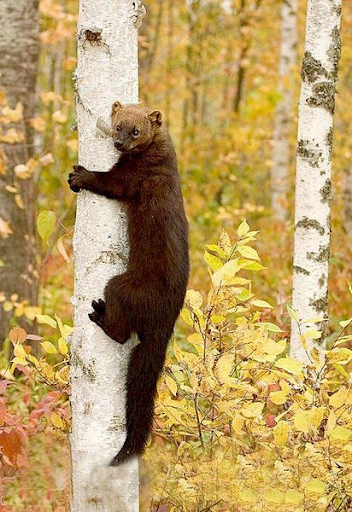
A fisher. Photo courtesy of animalcompare.com
As the animal reaches shore, it pauses on the hillside and looks back at you inquisitively. It has long, dark brown fur, a weasel-like face, stocky legs, and is about as big as a medium-sized dog. Before too long, it disappears into the forest as quickly as it had appeared.
What the heck was that?
What you’re looking at is called a fisher.
Despite the name, fishers don’t fish, and they don’t particularly enjoy swimming, either. They’re members of the mustelid family (think: weasels, otters, martens, and wolverines) and are incredibly elusive. Historically, fishers ranged throughout the forests of North America, but heavy trapping for the fur trade and widespread logging caused them to be extirpated from much of their former range. Today in the Western United States, healthy populations remain in places like Idaho, western Montana, and Canada, where they are most often found in large, old growth forests. They make their dens in hollowed logs and tree cavities that are large enough, so it makes sense why you would see one at this fishing hole.
But don’t let their cute faces fool you. Fishers are fierce predators and are one of the few animals capable of hunting porcupines, helping keep their populations in balance. This is important because porcupines can damage trees from herbivory when there are too many of them. In addition to porcupines, they’ll hunt birds or small mammals and eat berries and other forage.
Many people who spend their entire lives exploring forests never see a fisher. They're secretive, primarily active at dawn and dusk, and tend to avoid people. So this makes every sighting extremely memorable.
This seemingly mythical wildlife encounter became a reality for us during our last hitch on the St. Joe River. I’ve seen one before deep in the backcountry of the Frank Church River-of-No-Return Wilderness in 2021 where the last registered hiker checked in years before, but definitely wasn’t expecting to see one a few miles down the popular St. Joe River Trail. It’s not uncommon to spot pikas, mountain goats, or moose in the proposed Great Burn Wilderness, but a fisher is on an entirely different level.
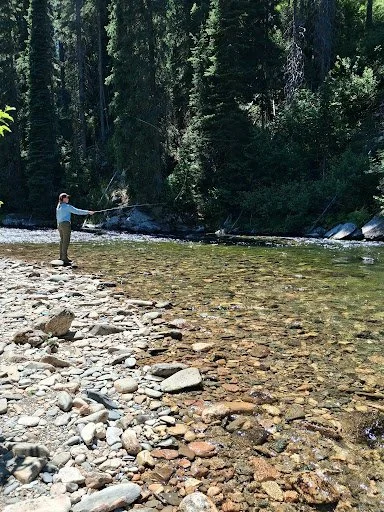
Grace fishing with her tenkara rod on the St. Joe River during lunch break
Encounters like this are a reminder of why protecting large, connected forests matters. Fishers depend on healthy forests with plenty of cover and downed logs, and seeing one on the St. Joe River is a sign that this landscape still provides the habitat that these elusive animals need to thrive. And not only do fishers depend on this habitat, but so do many other species that exist within the Great Burn ecosystem.
So for all of you reading this, thank you for supporting the Great Burn Conservation Alliance. Every trail maintained, every invasive weed treated, and every acre of habitat protected helps keep places like this wild - for fishers and for the people lucky enough to catch a glimpse of one.
If you’re curious to learn more about fishers and their behaviors, check out these resources: