Cory Hoffman, Restoration Crew, Kelly Creek, July 8th-15th, Kelly Creek Idaho
The Great Burn and Native Trout
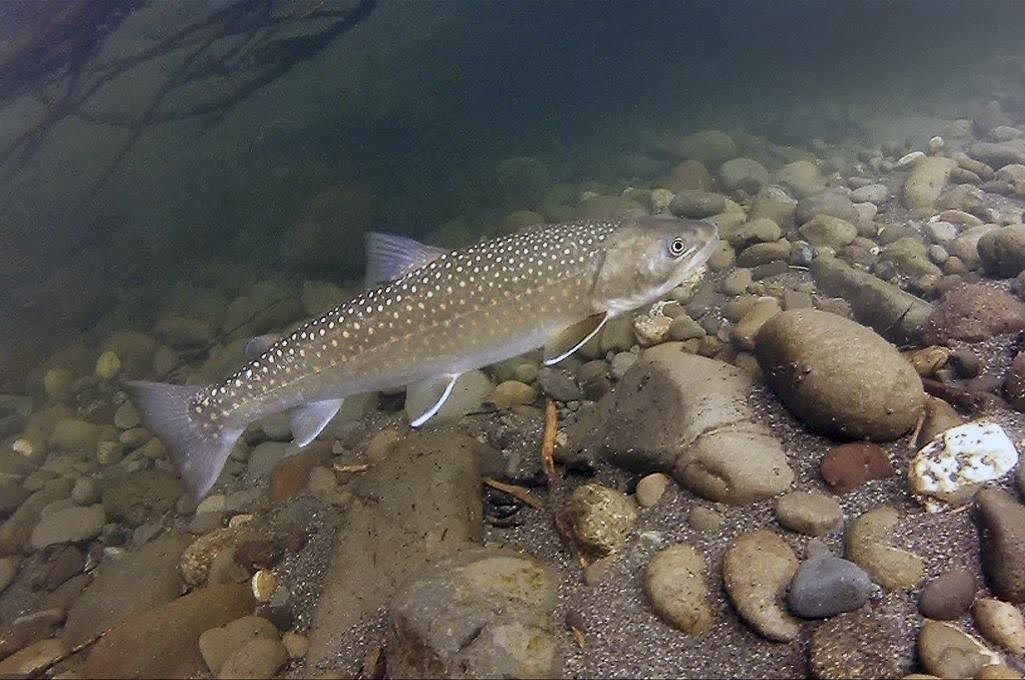
Bull Trout (Image courtesy of The Upper Columbia Salmon Recovery Board)
When you look at a map of the Great Burn, you may notice that many trails either follow streams or lead to lakes. There are multiple reasons for this, but among them are humans' need and desire for water. While water is a critical aspect of human recreation in the Great Burn, as well as in many other areas, it is also habitat for aquatic and semi-aquatic wildlife such as macro-invertebrates, amphibians and fish. I would like to use this opportunity to talk about what makes the Great Burn special for creating habitat for bull trout and westslope cutthroat trout, two iconic species that face many threats. Bull trout in particular, are a species listed as threatened under the Endangered Species Act.
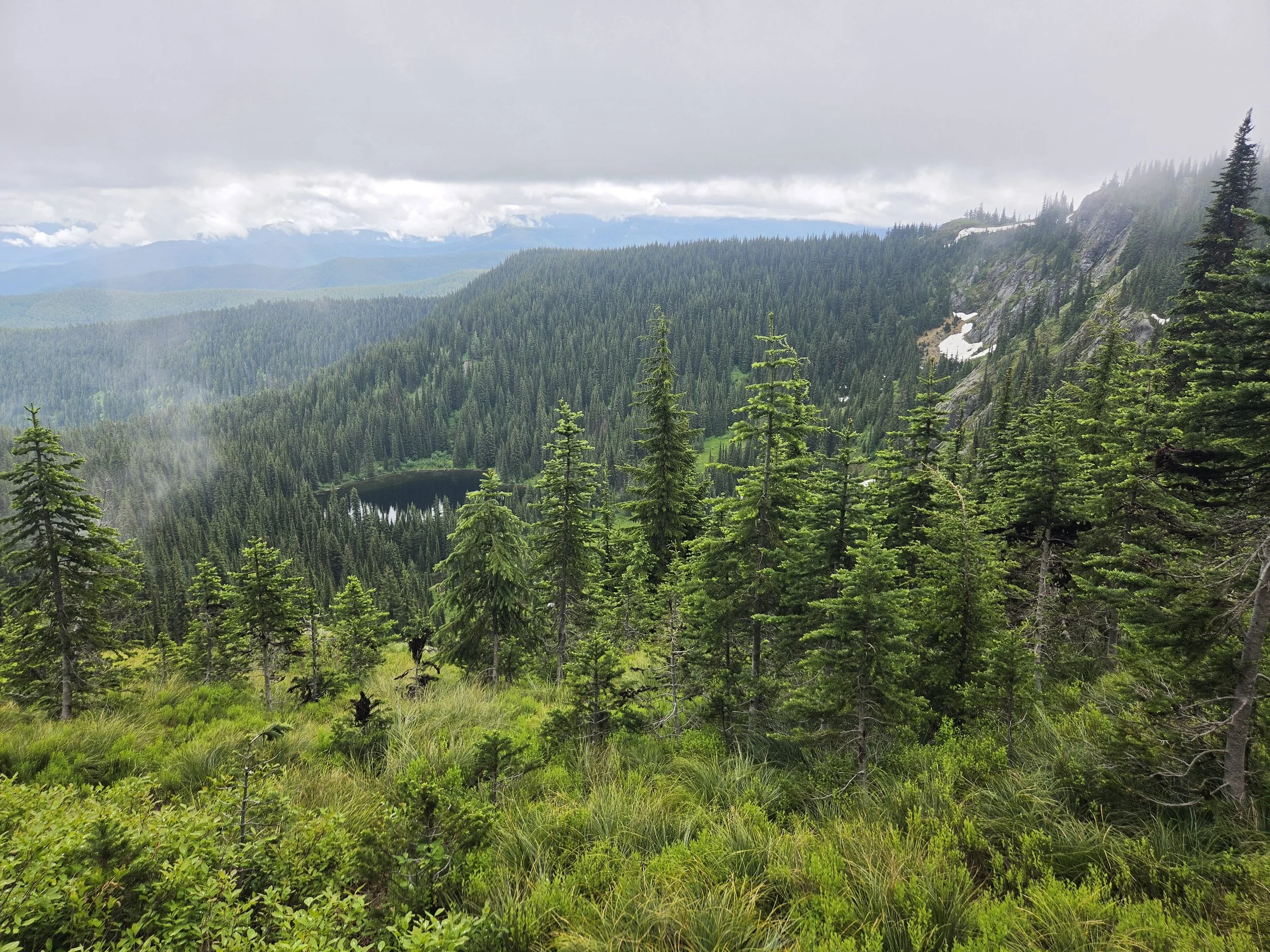
Tadpole Lake below the Stateline Trail, receiving snowmelt and rain.
Why the Great Burn is good habitat for bull trout and cutthroat trout
Bull trout and other native fish need the five C’s for good habitat. They need clean, clear, cold, complex and connected streams. The Great Burn provides this in many ways. Lets start with the first two C’s, clean and clear, and move along from there.
Clean
Clean often refers to a lack of pollutants, while clear often refers to water with low levels of suspended sediment. The lack of human development in the Great Burn helps minimize levels of pollution. I will point out that much of my job working on the Restoration Crew uses chemicals that are toxic to control invasive plant species. We are always thinking of ways that chemicals could get into surface or groundwater, and do everything to minimize those risks. We can compare to watersheds that have more infrastructure, or past mining, there may be more chances for pollutants like heavy metals or other toxic chemicals to get into the water. So while some impacts exist in the Great Burn, they are much less than areas with more human impact.
Clear
Sediment is another form of pollution, though it generally poses risk to fish and other aquatic life by causing suffocation, especially to eggs. Bull trout, cutthroat, and many other species of native fish seek out areas where groundwater rich in oxygen will flow to the eggs they deposit, giving them the best chance to survive. Sediment can cover those eggs, causing suffocation and death. Sediment generally ends up in water from erosion. While erosion is a natural process, human activities like roads and agriculture can greatly increase erosion rates. Large buffers from vegetation around streams that are common in much of the Great Burn help slow erosion and keep sediment out of the water.
Cold
The area receives a lot of precipitation, and some of the high mountains and ridges hold snow well into the summer. The influx of snowmelt helps keep water temperatures lower later into the year when flows get low. Bull trout can’t tolerate warm waters, and their bodies will start shutting down and they will cease feeding at temperatures of 18 degrees Celcius or 64 degrees Fahrenheit. When temperatures rise in rivers at lower elevations, such as the Clark Fork or Clear Water River, fish will head to higher elevations in some of the feeder tributaries that have cooler water.
Complex
Complexity of watersheds allows the fluvial hydraulic patterns to play out, creating habitat features used by fish of different age groups to hide from predators, feed and spawn. Different forest types within the Great Burn, as well as burns of different ages allow for trees to fall in the water to create overhead cover. The Great Burn has a great amount of diversity from variations in precipitation, fire patterns and general lack of resource extraction that provides ample cover. In addition, some of the watersheds of the Great Burn run for many miles, with lots of smaller feeder tributaries that allow many options for fish. Rocks of different sizes create riffles, and pools that fish can hide behind.
Connected
Finally, connected waters are important because they allow movement between individuals to different populations. This not only helps with the flow of genetics but also allows basic life strategy functions like spawning in tributaries. Roads are one way that streams lose connectivity, because culverts can create barriers to fish passage. The roadless nature of the Great Burn means that fish don’t have to deal with the man made barriers found in many watersheds. Above the dams and roads, the fish are free to move to small tributaries flowing out of high alpine areas, to lower large rivers like the Lochsa and North Fork of the Clearwater to grow to adulthood.
Our last hitch was in the Kelly Creek drainage of Idaho, drawing anglers from all over to fish the legendary waters. I know that the healthy watershed provides what the fish need, to grow in numbers that can provide anglers with an unforgettable day. But as I watched one angler wade out to the Middle of Kelly Creek, before wading up Cayuse Creek, the fish wasn’t the only draw. Four miles from the trailhead, and no other anglers competing for the good holes, he could be immersed in nature. I know I could feel it, as I went to get water and watched the moon rise up over the ridge.